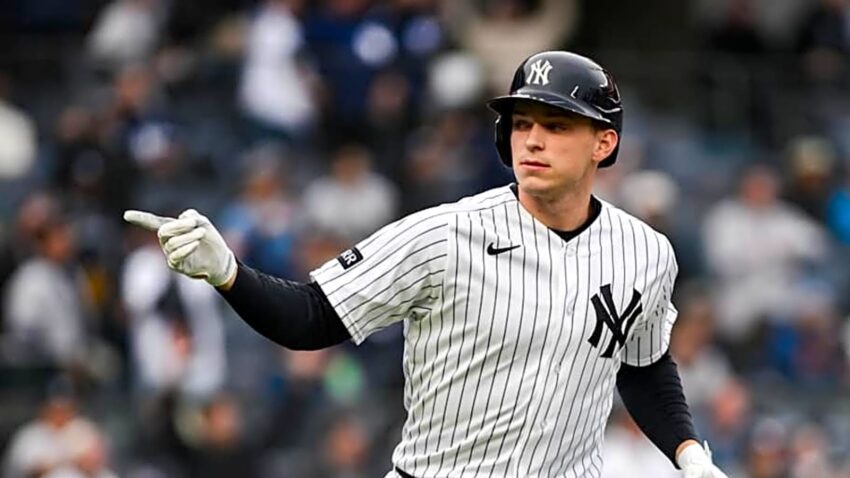
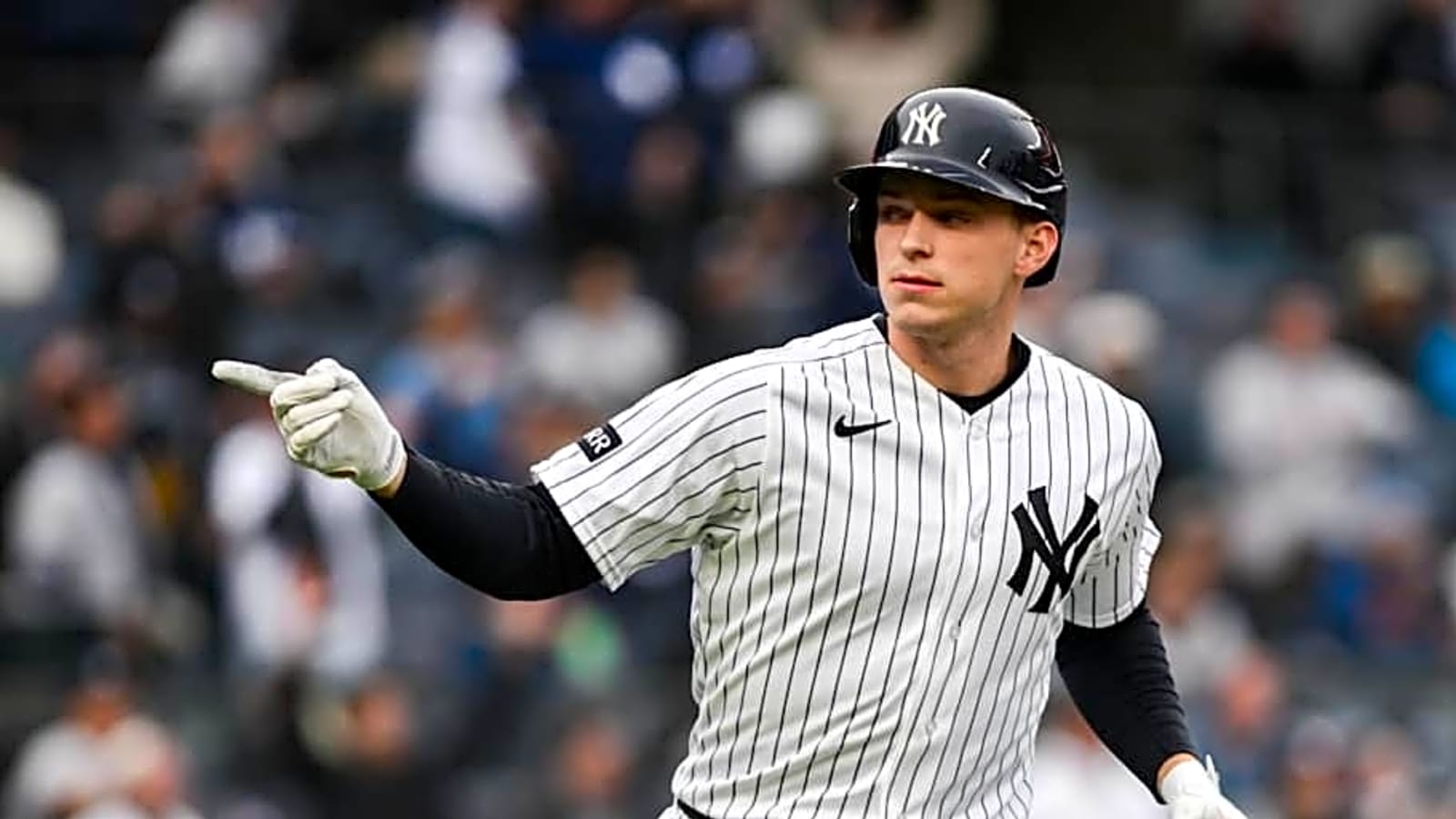
The New York Yankees play lefty-righty matchups almost to their own detriment. It is to the point where, if they could pluck any guy who bats right-handed off the street to face a southpaw, they may go with them over Ben Rice.
For the second straight night, Rice sat on the bench. It worked out in game one against the Los Angeles Angels. The Yankees had a classic showdown, where they outlasted the Angels in what will surely become one of those Yankee Classics on the YES Network. Things were different in game two, though.
That high-scoring win almost feels like an outlier, whereas that 7-1 slogfest where the Yankees did little to get to Reid Detmers was the lackluster affair that has plagued them since last week. The Yankees treated Detmers, who had allowed eight earned runs in 15.2 innings pitched coming into that game, like he was the second coming of Chuck Finley or Jered Weaver. They had nothing for him all night.
Not having Rice in the lineup, given the team’s propensity to struggle to score runs, feels like a self-inflicted wound. It’s true that Rice hasn’t hit lefties to the degree that he has hit right-handed pitching. His hitting .196/.274/.403 against them is a tangible explanation for why Aaron Boone kept him out of the game, but it isn’t like the guys in his place are world beaters or even have a future on this team.
Goldschmidt has had success against lefties, hitting .336/.411/.570 off of them last year. At this point in his career, though, Goldschmidt is 38 years old, with 8,855 plate appearances under his belt. It was also clear that he wore down in the second half of last year.
It’s not just Rice’s detriment to have the kid gloves on him against lefties; if his contemporary at first wears down again, it’s also a detriment to the Yankees at large. Rice may end up seeing his most repetitions against left-handed pitchers later in the year in games that matter more. That could be in late September if the Yankees find themselves in another tight division race or in the postseason. Why not let him figure it out when the stakes are lower?
Boone had a plan for Rice. He admitted as much before the loss. While Rice was relegated to a bench role for the second straight game, the goal was to get him into the game at some point. It wasn’t a full-on off-day.
“I’ve just been able to so aggressively use Benny off the bench,” Boone said, according to the New York Post’s Greg Joyce. “Even though he’s not in the starting lineup, I view him playing a major [role]. In the last two games, he’s sat against a lefty, he’s got [four] at-bats – homer, walk, single. I’ve been able to kind of fire him at the most important part, and it might be early in the game.”
It was apropos that it played out exactly as Boone said it would. It was just about the only thing that went right.
Rice eventually entered the game. It happened in the bottom of the 8th with the Yankees down seven. With two outs, he hit a sacrifice fly, which scored Randal Grichuk.
It is quite fitting that, for the second night in a row a starter has come off the bench to do some damage. Last night, it was Trent Grisham, with his two-homer, 5-RBI masterpiece. That worked out more in the Yankees’ favor.
Rice’s sacrifice fly did little to impact the game. All it did was keep them from getting shut out. Shut out or not, those losses all count the same, and the Yankees are becoming accustomed to it despite a hot start.
While the Yankees have this obsession with matchups, playing their best players would do them well at this point. It doesn’t seem like the Grichuks of the world are going to turn things around. If he does, more power to him, because the Yankees need the firepower where they can get it, but it feels unlikely.
Despite a promising season, the Bears’ defense lacked a consistent, game-ending edge presence. Montez Sweat showed flashes of dominance, Gervon Dexter provided solid interior pressure, and Tremaine Edmunds anchored the linebacker corps. But when it came time to close games against top-tier quarterbacks, Chicago didn’t have the kind of relentless edge rusher who tilts protections on every snap.
That reality has sparked internal discussions about a bold, franchise-altering move: a trade for Myles Garrett of the Cleveland Browns.
Garrett is exactly the type of defender the Bears covet. He’s durable, explosive, and disruptive without relying on scheme help. At 30 years old, with multiple years left on his contract, he represents both immediate impact and sustained dominance — the rare edge rusher who changes how offenses are built for an entire week.
Proposed Trade Package Bears receive:
Browns receive:
For Cleveland, this is the type of offer that forces a long look in the mirror. Two first-round picks provide the backbone of a rebuild, while veteran help offers immediate stability in the trenches or at receiver. It’s not just draft capital — it’s direction.
For Chicago, the move would be about conviction. Pairing Garrett with Sweat and Edmunds would instantly create one of the most feared front fours in football. That kind of pressure shortens games, protects leads, and — perhaps most importantly — keeps Caleb Williams from having to win every contest in shootout fashion.
The obstacle, of course, is money. The Bears are projected to be close to the 2026 salary cap. Adding Garrett’s cap hit would require some restructuring — Williams, Sweat, and potentially Jaylon Johnson would all be part of the financial calculus.
A cut or trade of Darnell Wright could also be necessary to make the math work.
That’s why league insiders remain cautious. While the fit is undeniable, Chicago has historically preferred internal restructures, draft development, and value free-agent signings over blockbuster trades involving multiple first-round picks.
Still, championship windows don’t stay open forever.
The Chiefs, Seahawks, and other teams may be circling. The Browns may not want to move their defensive cornerstone. But if Chicago puts an offer like this on the table, it becomes less about desire — and more about whether Cleveland can truly afford to say no.