Kansas City, MO – April 16, 2026 – Just 12 hours after Governor Mike Kehoe rejected the proposed $120 million expansion of the Arrowhead Training Complex, Clark Hunt, owner of the Kansas City Chiefs, received an unexpected offer from Governor Laura Kelly of Kansas.
Governor Kelly’s message was clear: “If one door closes on the Chiefs, Kansas is ready to open a bigger, stronger, and more ambitious one.” This statement marks a turning point in the Chiefs’ future.
Kelly emphasized that this offer wasn’t just about a new training complex, but an opportunity for the Chiefs to redefine themselves and build something better in Kansas. The state is prepared to support the team every step of the way.
The rejection of the expansion plan was a blow to the Chiefs, as it had been a major part of their growth strategy. However, Governor Kelly’s offer shifts the focus to something much larger.
Kansas is offering the Kansas City Chiefs the chance to move forward with plans for a new stadium. This project would be a major investment that could reshape the team’s future.
Clark Hunt has confirmed that the team is open to exploring this opportunity, and he acknowledged that Kansas’s proposal provides an exciting new vision for the franchise. He expressed optimism about this bold offer.
The Arrowhead Training Complex expansion was initially aimed at increasing office space and parking to accommodate the team’s growth. However, with this new focus, the Chiefs could have something far more impactful.
A new stadium in Kansas could transform the team’s home base into a state-of-the-art facility, offering modern amenities and attracting even more fans to the Chiefs’ games.
This proposal reflects a broader vision to secure the long-term future of the franchise. Kansas is positioning itself as a strong partner, ready to help the Chiefs become a central force in the NFL.
While the idea of moving away from Kansas City raises some concerns, the potential for a new, larger stadium in Kansas could be a game-changer for both the team and the city’s sports culture.
The Chiefs are facing a significant choice. They can either continue with the current plans to expand the Arrowhead Training Complex or take up Kansas’s offer to build a brand-new stadium.
Many fans are excited by the prospect of a new home for the Chiefs. The team could enjoy enhanced facilities, better infrastructure, and more opportunities to grow the fanbase.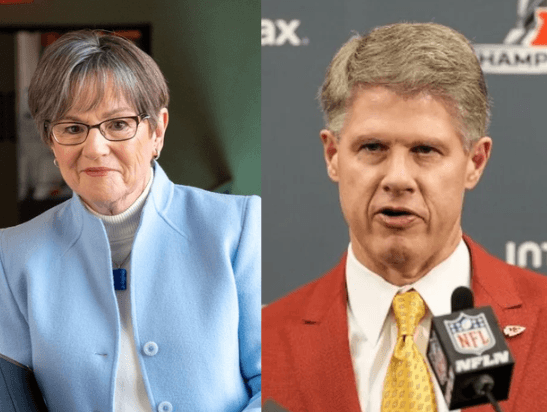
However, some fans are apprehensive about the potential change in location. The Chiefs’ identity is closely tied to Kansas City, and any move could alter the team’s connection to its history.
As the NFL evolves, the Kansas City Chiefs have the chance to lead the charge in building a new legacy. The bold decision from Kansas is a call for the team to grow beyond its current boundaries.
Clark Hunt has yet to make a final decision, but the Chiefs’ future now seems to be brighter than ever. The next few months will be crucial in determining the team’s direction.
Governor Laura Kelly’s offer is more than just a chance to expand the team’s facilities. It’s an invitation to redefine the Chiefs’ legacy in a new, ambitious way.
Kansas stands ready to back the Chiefs, and now, it’s up to Clark Hunt and the team to seize this opportunity and shape their future.
In a stunning act of solidarity that has reverberated from the Rockies to Ontario, three of the most revered figures in Colorado Avalanche history have reportedly announced they will boycott all future Hockey Hall of Fame activities.
The move comes as a direct response to the continued exclusion of legendary winger Milan Hejduk from the Hall.
Sources close to the organization indicate that Joe Sakic, Peter Forsberg, and Patrick Roy—all of whom have their numbers retired in Denver—have privately informed the selection committee
that they will no longer participate in Induction Weekend ceremonies or Hall-related advocacy until the man they call “the ultimate teammate” is rightfully enshrined.
The message from Mile High is absolute: You cannot honor the Colorado dynasty while ignoring the player who appeared in more games for this franchise than any other man.
Milan Hejduk wasn’t just a beneficiary of playing with Hall of Famers; he was an elite offensive force who defined consistency for 14 seasons. Known for his “Houdini-like” ability to find space and his lethal finishing, Hejduk was a cornerstone of the Avalanche’s most successful decade.
His résumé is statistically elite:
1,020 games played (A franchise record for the Colorado era)
375 goals and 805 points
Maurice “Rocket” Richard Trophy (2002-03): Led the NHL with 50 goals.
Stanley Cup Champion (2001): Scoring several clutch goals during the championship run.
Olympic Gold Medalist (1998)
Three-time NHL All-Star
Supporters argue that Hejduk’s “all-around” efficiency—evidenced by his league-leading $+52$ rating in 2003—and his status as the highest-scoring player in franchise history not yet in Canton (excluding active players) make his omission a glaring oversight.
A former captain reportedly summarized the group’s stance:
“Milan was the guy who made the engine run. He was quiet, he was professional, and he was absolutely deadly. We all have our jerseys in the rafters and our names in the Hall, but we know we don’t get there without Milan. To keep him out is to rewrite the history of our championships.”
For Sakic, Forsberg, and Roy, this boycott is a rejection of the “supporting cast” narrative. They believe Hejduk’s individual dominance—specifically his 50-goal season in the “Dead Ball Era”—stands alone as a Hall of Fame achievement.
In Denver, Milan Hejduk is more than just a stat sheet; he is the bridge between the 1996 and 2001 championships and the modern era. He remained loyal to the Avalanche for his entire 14-year career, a rarity in the modern NHL. Fans view his exclusion as a slight against the “quiet excellence” that allowed the more vocal stars to shine.
Hejduk’s case highlights the “Peak vs. Longevity” debate in hockey:
Does a 50-goal season in a low-scoring era hold more weight than raw career totals?
Should franchise records for legendary teams carry automatic weight?
Are voters penalizing “quiet” stars who didn’t court the national media?
For the legends standing behind him, the stance is non-negotiable: Respect the numbers. Respect the loyalty. Respect Milan.
As the 2027 selection cycle approaches, the “Avalanche Three” have thrown down the gauntlet. This isn’t just about a nomination; it is a unified demand for the respect a franchise cornerstone deserves.
Will the selection committee finally recognize the “Rocket” winner who played with more grace than anyone in the league? Or will Denver’s favorite son remain the most notable absence from the Hall?
For now, the icons of the Burgundy and Blue are unified:
Goals matter. Loyalty matters. The Franchise matters.
And in the history of the Colorado Avalanche, Milan Hejduk’s legacy is non-negotiable.