
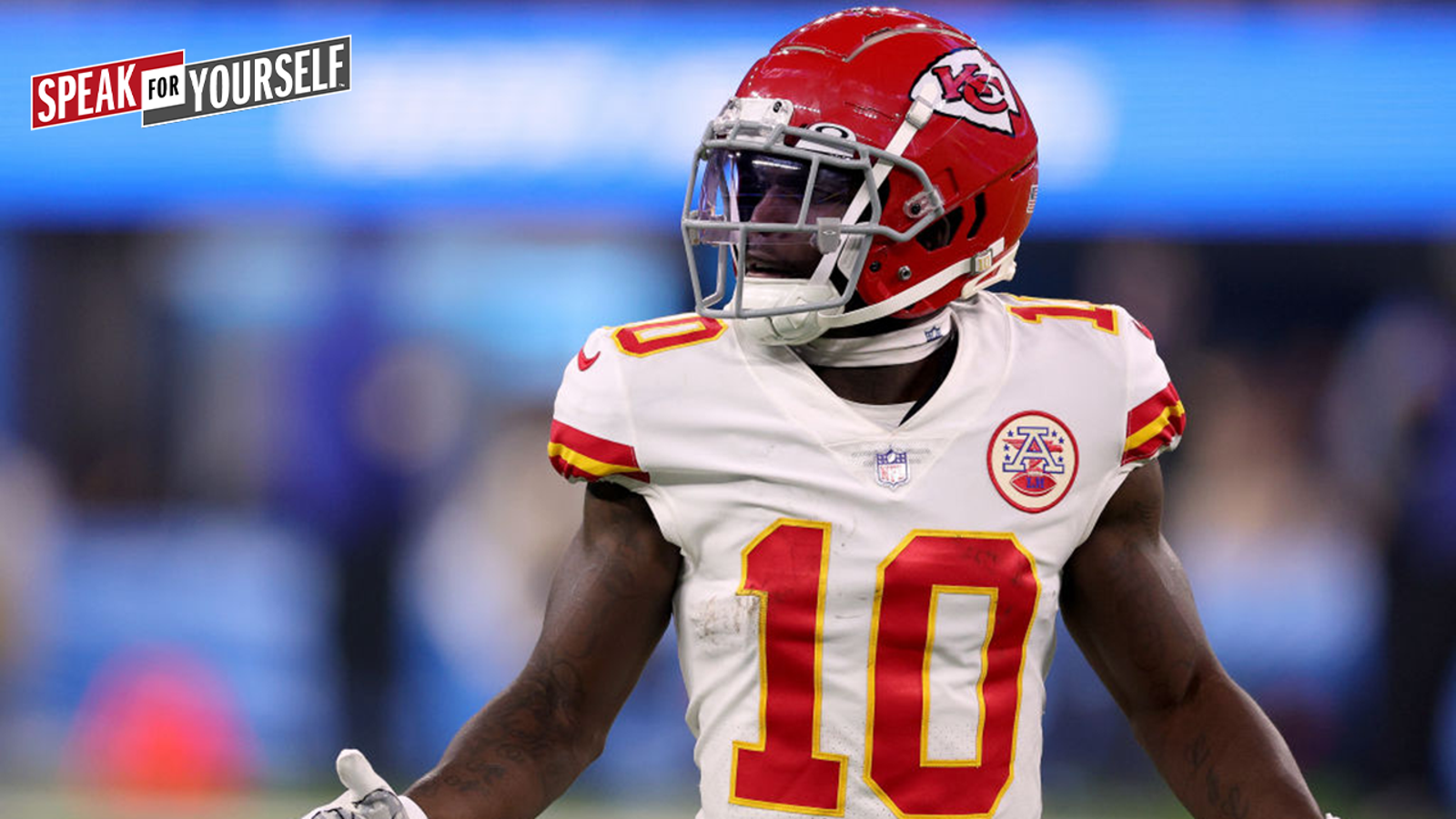
Some careers fade quietly. Some drift from team to team until the final whistle feels distant from where it all began. But for Tyreek Hill, the ending was never going to be ordinary.
It had to be home.
In a move that instantly sent waves of emotion across the NFL, Hill has signed a one-day contract with the Kansas City Chiefs to officially retire in the colors that made him a legend. At 32 years old, the “Cheetah” isn’t just stepping away from football. He’s closing the story exactly where it started.
Under the deafening roar of Arrowhead Stadium, where his speed once turned games into chaos, Hill made it clear this wasn’t about statistics or longevity. It was about identity.
“I didn’t want my final memory of football to be in any other jersey,” Hill shared. “Kansas City is where I became the Cheetah — the city that empowered me, the fans whose energy I fed on every Sunday, and the teammates who became brothers. If the ride ends today, I want it to end with the Kingdom.”
Those words didn’t just echo through the stadium. They resonated with an entire generation of fans who watched him redefine what was possible on a football field.
Drafted in the fifth round of the 2016 NFL Draft, Hill wasn’t expected to become the face of an offensive revolution. But from the moment he touched the field, everything changed.
He wasn’t just fast. He was unstoppable.
With world-class speed, explosive agility, and a rare ability to flip momentum in seconds, Hill became the most feared deep threat in football. Defensive coordinators didn’t just game plan for him. They feared him. Because one mistake, one step too slow, and the game was over.
His impact went beyond highlights.
Hill was a central figure in the Chiefs’ Super Bowl LIV victory, helping end a 50-year championship drought and launching a new era of dominance in Kansas City. Along the way, he earned eight Pro Bowl selections and multiple All-Pro honors, setting a standard for explosive playmaking that may never be matched.
And then there were the moments.
The peace sign mid-sprint. The impossible catches. The legendary “Jet Chip Wasp” play that became part of NFL history. These weren’t just plays. They were memories etched into the identity of the franchise.
In an era where careers are often defined by numbers, Hill chose something different.
He chose meaning.
Rather than letting his final chapter be written elsewhere, he returned to Kansas City to write the ending himself. Not as a visitor. Not as a former player. But as a Chief.
Because some legacies don’t belong to the league.
They belong to a city.
At 32, Tyreek Hill walks away not just as one of the greatest wide receivers in franchise history, but as the fastest, most electrifying playmaker to ever wear red and gold.
And in the Kingdom, that legacy will never fade.
Buffalo, NY – April 2026
The Buffalo Bills are grieving a loss that reaches far beyond the football field. Inside a league built on routine, toughness, and urgency, the emotional weight of this moment has left the organization shaken in a way no game result ever could.
When tragedy touches a professional locker room, it strips everything down to what matters most. Meetings, drills, and offseason plans suddenly feel small when compared with the absence of someone who helped shape the heartbeat of the building every single day.
According to the account surrounding the incident, the loss followed a medical emergency after a recent team workout. There was brief hope when he reportedly returned to the team facility earlier in the week, a sign that seemed to suggest improvement.
That hope did not last. The devastating news spread quickly through the organization, leaving players, coaches, and staff trying to process the kind of heartbreak that has no easy language and no immediate answer.
The Bills responded the only way a grieving team could. Team activities were canceled, and the focus turned away from football and toward people, pain, and the quiet need to stand beside one another through something far bigger than the sport itself.
That decision spoke volumes. In the NFL, schedules rarely stop moving, but loss has a way of forcing even the most disciplined organizations to pause and recognize that no profession, no matter how demanding, exists above humanity.
The team’s official response reflected that reality. It was not simply about mourning a staff member or acknowledging a tragedy in formal terms. It was about recognizing the loss of someone whose presence had meaning within the walls of the organization.
People in roles like his are often overlooked by the outside world, but inside the building, they matter deeply. They are part of the daily rhythm, the trusted voices in preparation, recovery, encouragement, and accountability.
Before moving into coaching and development work, he had earned respect through his own football path. That background helped shape the way he connected with players, because he understood not only the demands of the game, but also the emotional toll it can take.
Those around him believed that quality made him especially valuable. He was not just someone helping players physically prepare. He was seen as a mentor, a motivator, and a steady source of belief for those still trying to find their footing.
The flood of tributes only reinforced that image. Players, colleagues, and supporters remembered a person whose energy, discipline, and genuine care left a mark that extended well beyond assignments, schedules, or titles.
For the Bills, football will eventually return to the foreground. Practices will resume. The season will keep moving. But the emotional space left behind by this loss will not disappear simply because the calendar says it must.
And near the end of all the statements, tributes, and shared grief, the name at the center of this heartbreak becomes even heavier: Steve Miller. He was only 29, but by every account, his impact within the Buffalo Bills organization was lasting, personal, and impossible to forget.